
Purpose
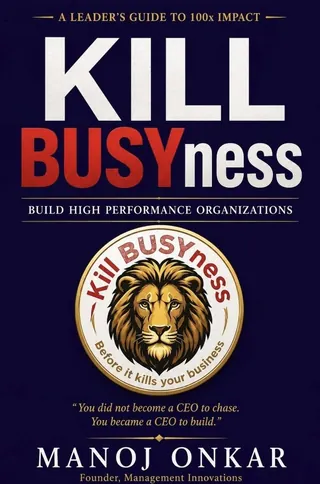
This is the first move of ROAR: Reflect. Most organizations have goals and targets; what they rarely have is a genuine purpose, and without one they remain transaction houses rather than a legacy in the making. This isn't about vision or mission statements — it's about a lived purpose that actually influences decisions. Purpose is not a goal or a destination; it is the "why" behind the game and its impact on the world, and it answers a simple question: what would our stakeholders miss if we didn't exist? A real purpose becomes the North Star for every decision — what gets funded, who gets hired, what gets refused, and what people will endure when the work turns difficult. BUSYness, in part, is what fills the space where purpose should live. When people know why they're there, they prioritize naturally and protect what matters. When purpose is absent, people default to activity, because motion feels better than uncertainty. The chapter tells the story of Anand, a CEO who arrived at a workshop with a full page of urgent operational questions. Instead of addressing the list, the facilitators asked a deeper question first: why does your organization exist? By the end of two days, the leadership team had co-created a purpose they were genuinely passionate about — and half of the original "urgent" problems no longer seemed to matter. Purpose isn't a soft value exercise; it's performance architecture. Research cited in the book shows people are 78% more likely to want to work for a purpose-led organization, and purpose measurably improves retention through hard periods that would otherwise drive good people out the door. But purpose has a habit of disappearing into the middle of an organization: the CEO means it, the leadership team is aligned, and somewhere on the way down to the frontline it evaporates into a list of KPIs and tasks. Because 70% of team engagement is shaped by the immediate manager, purpose survives only when managers translate it into daily behavior — if a manager can't explain why the work matters, the organization doesn't have a purpose, it has a slogan. The cost of losing purpose is not abstract. The book recounts an infrastructure conglomerate whose CFO initially wanted to unite the group's "separate kingdoms" around a shared purpose — until the group chairman shut the initiative down mid-planning, insisting purpose "doesn't make any difference in how business is run." Twenty-two months later, the group collapsed, with catastrophic consequences for investors, employees, and vendors. The refusal was never really about the intervention; it was about the discomfort of looking honestly at what the business had become. BUSYness without purpose eventually becomes self-destructive. The chapter closes with two practical exercises: the Purpose Translation Test, where a senior leader, a manager, and a frontline employee each independently write why the organization exists, so the gaps become visible; and the Purpose Draft, a set of five questions — from "who would suffer if we didn't exist?" to "what would our best people say keeps them here?" — designed to turn purpose from a poster on the wall into the operating filter for the organization. Two closing exercises turn the chapter's argument into action. The Purpose Translation Test asks you to write, in one sentence, why your organization exists — then have a senior leader, a manager, and a frontline employee independently do the same, and lay all four sentences side by side to see where they align and where they quietly diverge. The Purpose Draft goes deeper with five pointed questions: what problem you exist to solve for the world rather than for shareholders; who would genuinely suffer if you disappeared; what single contribution no other organization makes in quite the same way; what would have to be true for your work to be "finished"; and what your best people — the ones who could work anywhere — would say keeps them here. The book is candid that most organizations will find real gaps between what leadership believes the purpose is and what the frontline experiences day to day, and that the size of that gap, not the elegance of the mission statement, is the real measure of whether a purpose is lived or merely printed.
Write, in one sentence, why your organization exists — for the people or the world it serves, not for shareholders. Then ask a manager and a frontline employee to do the same, and compare.
Log in to save your private reflection and earn XP.